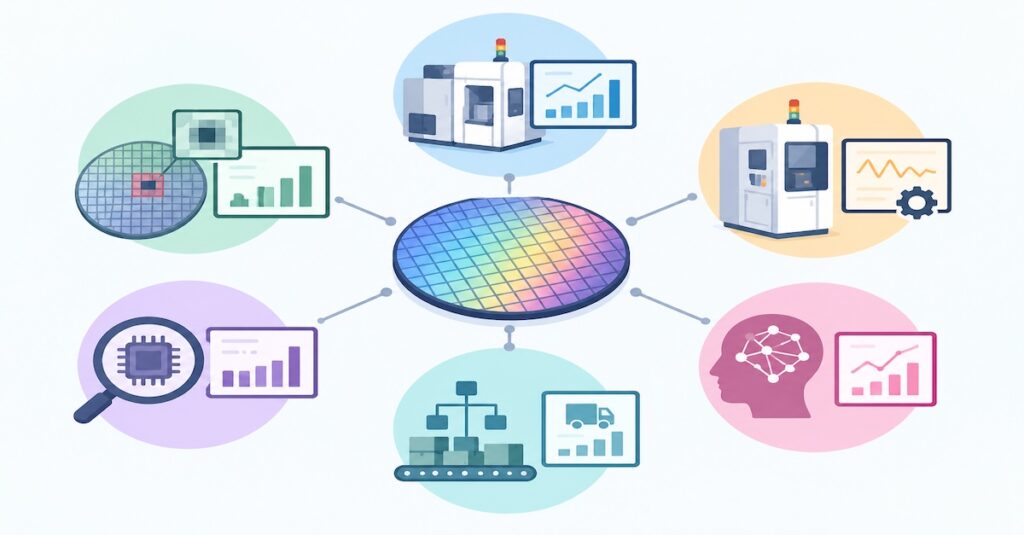
Image Generated With GPT Image 2.0
Semiconductor Data Analysis Tools
Semiconductor manufacturing is one of the most data intensive industries in the world. Every stage of production, from wafer fabrication and equipment monitoring to testing, packaging, and reliability, generates large volumes of information. A single wafer can pass through hundreds of process steps, producing data on process conditions, equipment performance, defects, measurements, and product behavior.
The challenge is not simply collecting this data, but turning it into useful insights. Data analysis tools help engineers connect information from different manufacturing stages, identify trends, detect abnormal behavior, and investigate yield or quality issues faster. This can improve process control, reduce manufacturing costs, and shorten root cause analysis.
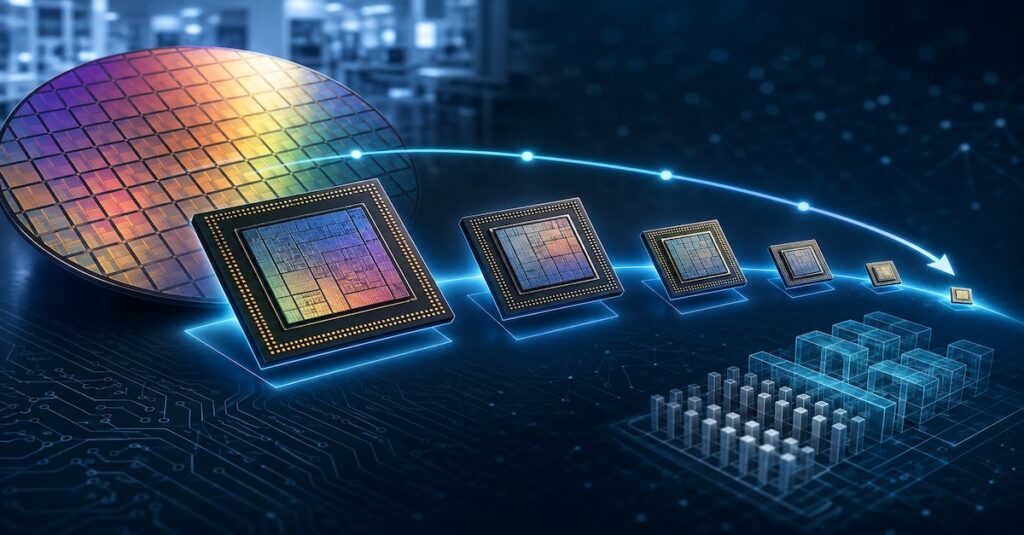
As technologies such as chiplets, advanced packaging, and high bandwidth memory increase device complexity, semiconductor companies must analyze even more data across the production flow. This is making data analysis tools an increasingly important part of modern semiconductor manufacturing.
Comparing the Main Types of Semiconductor Data Analysis Tools
Semiconductor data analysis tools serve different purposes depending on the type of data being analyzed and the problem engineers are trying to solve. Some tools focus on manufacturing and equipment performance, while others concentrate on yield, test, reliability, or overall production operations.
The table below summarizes the major categories and their primary functions.
| Tool Type | Main Focus | Typical Data | Primary Use |
|---|---|---|---|
| Manufacturing Data Analytics | Production and process performance | Process parameters, wafer history, lot data | Improve process control and manufacturing efficiency |
| Yield and Test Analytics | Electrical test and product yield | Wafer sort, final test, bin and parametric data | Identify yield loss and test related issues |
| Equipment Analytics | Manufacturing equipment performance | Sensor data, alarms, equipment logs | Detect equipment drift and support maintenance |
| Quality and Reliability Analytics | Product quality and long term reliability | Qualification, reliability and failure data | Identify quality issues and reliability risks |
| Supply Chain and Operations Analytics | Manufacturing flow and business operations | Capacity, inventory, cycle time and supplier data | Improve production planning and supply chain visibility |
| AI and Advanced Analytics | Pattern detection and prediction | Data from multiple manufacturing sources | Detect anomalies, predict problems and accelerate analysis |
Although these categories have different areas of focus, they are becoming increasingly connected. A yield problem, for example, may require engineers to combine test data with manufacturing history and equipment information to identify the actual source of the issue. As semiconductor companies connect more of these data sources, analysis can move from simply reporting what happened to explaining why it happened and predicting what may happen next.
Future of Semiconductor Data Analytics
Semiconductor data analysis will become even more important as devices continue to increase in complexity. Technologies such as chiplets, advanced packaging, HBM, and heterogeneous integration create more manufacturing steps and more sources of data that must be understood together. The value of semiconductor analytics therefore depends not only on collecting more information, but on connecting the right data and delivering useful insights to engineers quickly.
At the same time, data analysis tools are likely to become more automated and easier to use. AI, machine learning, and better data integration can help engineers identify patterns, detect anomalies, and investigate problems faster across large and complex datasets.
Companies that can effectively use these tools will be better positioned to improve yield, reduce manufacturing costs, maintain quality, and accelerate problem solving across the semiconductor lifecycle.