Image Generated With GPT Image 2.0
The Semiconductor Innovations That Enabled AI
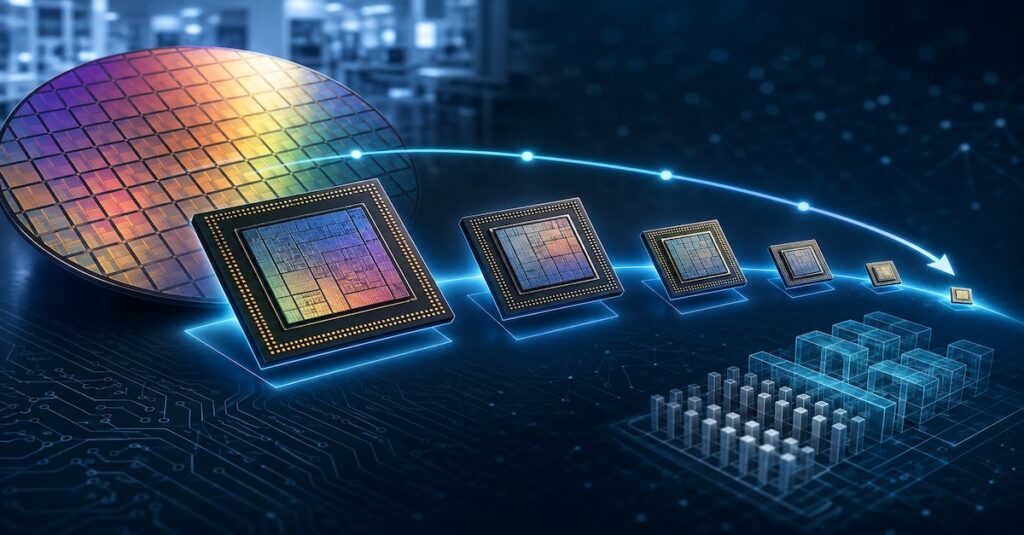
Artificial intelligence is frequently associated with algorithms, software, and large-scale models. However, every milestone in AI has been enabled by continuous innovation in semiconductor technology. Long before generative AI transformed industries, the semiconductor industry had spent decades advancing transistor technology, manufacturing processes, memory architectures, packaging, and system integration. These innovations steadily increased computing capability while reducing power consumption and cost, creating the hardware platform upon which modern AI was built.
For much of computing history, improvements in processor performance were sufficient to support increasingly sophisticated applications. AI fundamentally changed this relationship. Modern AI workloads execute trillions of mathematical operations while processing enormous datasets that must move rapidly between compute, memory, and storage. As a result, AI performance is no longer determined by processor speed alone.
Instead, it depends on how efficiently an entire semiconductor system can generate, transfer, store, and process data. This transition has transformed silicon innovation from device scaling to comprehensive system engineering, in which advances across multiple technology domains collectively enable AI performance.
| Silicon Innovation | Contribution to AI |
|---|---|
| Transistor Scaling | Increased transistor density and energy efficiency, enabling increasingly powerful AI processors. |
| Compute Architectures | GPUs and AI accelerators introduced massive parallelism required for neural network training and inference. |
| Memory Technologies | High Bandwidth Memory (HBM) and larger memory capacity removed bandwidth limitations for large AI models. |
| Advanced Packaging | Chiplets, 2.5D integration, and heterogeneous packaging brought compute and memory closer together while improving scalability. |
| High-Speed Interconnects | High-bandwidth die-to-die and accelerator-to-accelerator communication enabled distributed AI training across thousands of processors. |
| Advanced Manufacturing | Leading-edge process technologies, Extreme Ultraviolet (EUV) lithography, and yield engineering made highly complex AI processors manufacturable at scale. |
| Semiconductor Test & Productization | Comprehensive validation, characterization, and production test ensured quality, reliability, and high manufacturing yield for AI silicon. |
Each of these innovations addressed a critical bottleneck that emerged as AI systems grew more complex. Transistor scaling provided the computational density necessary for larger models, while GPU-based architectures introduced the parallel processing capabilities required for matrix-intensive AI workloads.
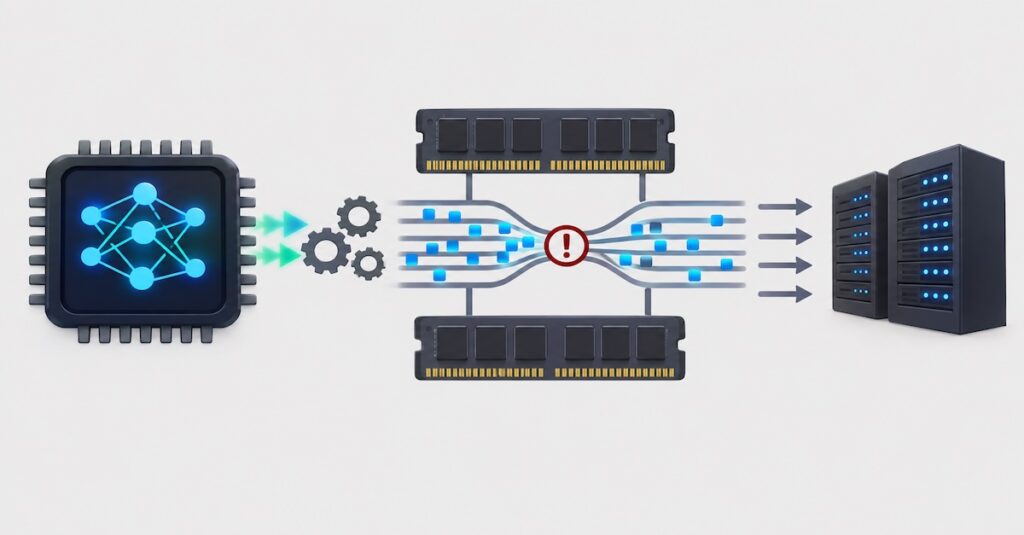
As models continued to expand, memory bandwidth became a limiting factor, driving the adoption of High Bandwidth Memory (HBM) and advanced packaging technologies that physically brought memory closer to compute.
The challenge then extended beyond individual processors. AI training now relies on thousands of accelerators operating as a single distributed system, making high-speed interconnects essential for efficient communication and workload synchronization. At the same time, manufacturing innovations, including leading-edge lithography, process integration, and yield engineering, have enabled these increasingly complex devices to be produced at commercial scale.
Equally important, semiconductor test and productization ensure that every AI processor delivers the performance, reliability, and quality required for deployment in hyperscale data centers. Together, these advances demonstrate that AI is not enabled by a single semiconductor breakthrough but by the coordinated evolution of the entire silicon ecosystem.
Silicon Continues To Define The Future Of AI
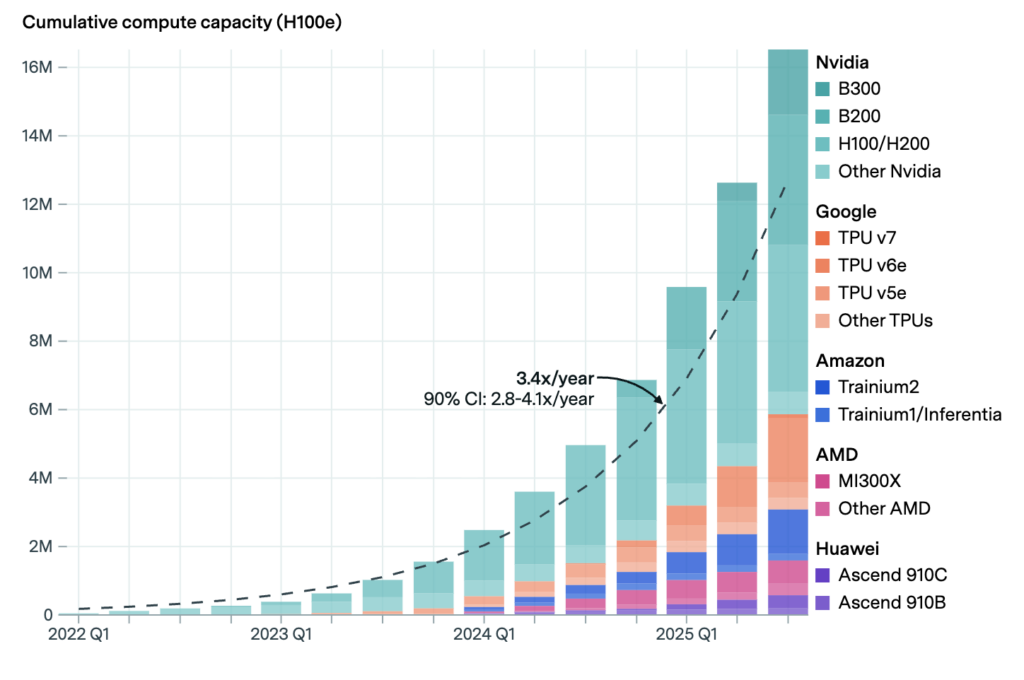
The future of artificial intelligence will be determined as much by advances in semiconductor technology as by improvements in algorithms. While foundation models continue to grow in capability, their computational, memory, and energy requirements are increasing even faster. Meeting these demands requires innovation across every layer of the silicon stack, from transistor technology and system architecture to manufacturing and deployment. The next phase of AI scaling will therefore depend on how efficiently silicon can deliver higher performance, greater memory capacity, and lower energy consumption at scale.
Several technology domains are expected to shape this evolution. Memory technologies will continue to expand in both bandwidth and capacity to support increasingly larger models. Advanced packaging will enable heterogeneous integration of compute, memory, and specialized accelerators, reducing data movement while improving overall system efficiency. High-speed interconnects, including electrical and optical solutions, will become essential as AI clusters grow from thousands to potentially millions of interconnected processors. At the same time, innovations in power delivery, thermal management, and cooling will be required to sustain the power densities of next-generation AI infrastructure.
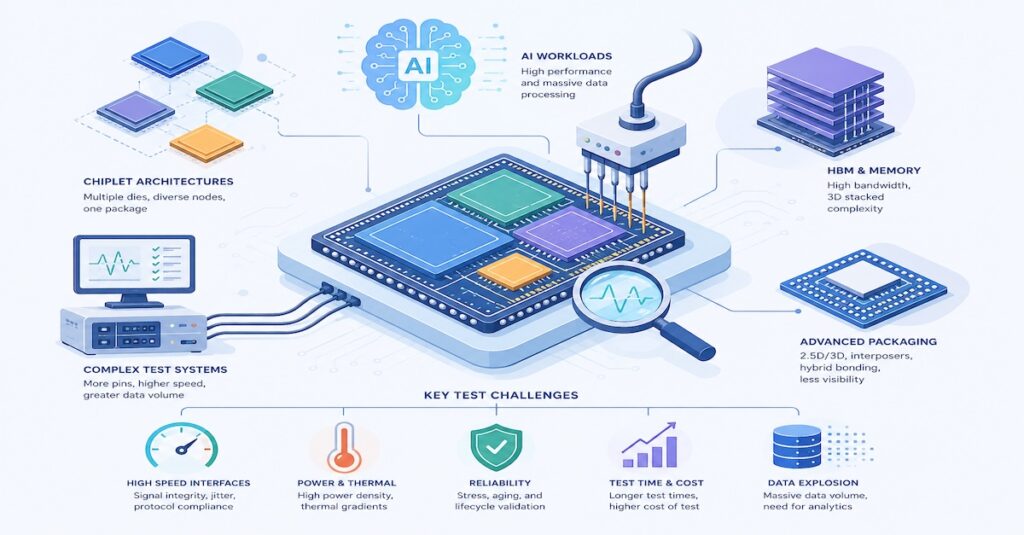
Equally important is the manufacturing ecosystem that transforms advanced silicon designs into reliable products. Leading-edge process technologies, advanced lithography, yield engineering, semiconductor test, and productization will remain critical for delivering high-volume AI processors with the quality and reliability demanded by hyperscale deployments. As device complexity continues to increase through chiplet architectures and heterogeneous integration, manufacturing excellence will become an even stronger competitive differentiator.
Ultimately, the future of AI will not be defined by software alone. It will be shaped by the industry’s ability to continuously advance silicon technologies that enable greater computational capability, faster data movement, improved energy efficiency, and scalable manufacturing. Every new generation of AI will continue to be built upon an equally important new generation of semiconductor innovation.