Image Generated With GPT Image 2.0
Data Is Becoming A Strategic Investment
For decades, semiconductor investments have focused on fabs, process technologies, manufacturing equipment, and packaging innovations. While these remain critical, another area is demanding increasing attention: semiconductor data.
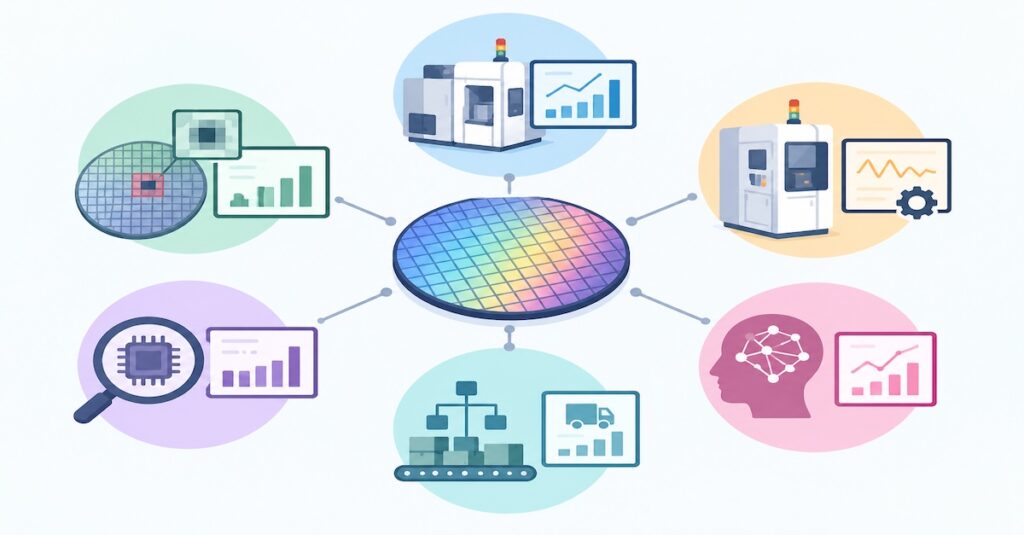
Every stage of the semiconductor lifecycle generates valuable information, from design and process development to manufacturing, test, qualification, and field operation.
As technologies such as chiplets, High Bandwidth Memory (HBM), advanced packaging, and sub-2nm nodes increase product complexity, the cost of generating meaningful silicon data continues to rise.
Yet this data has become essential for making technical, manufacturing, and business decisions. Increasingly, semiconductor companies are recognizing that investments in data generation and analytics are just as important as investments in physical infrastructure.
Data Reduces Manufacturing Risk
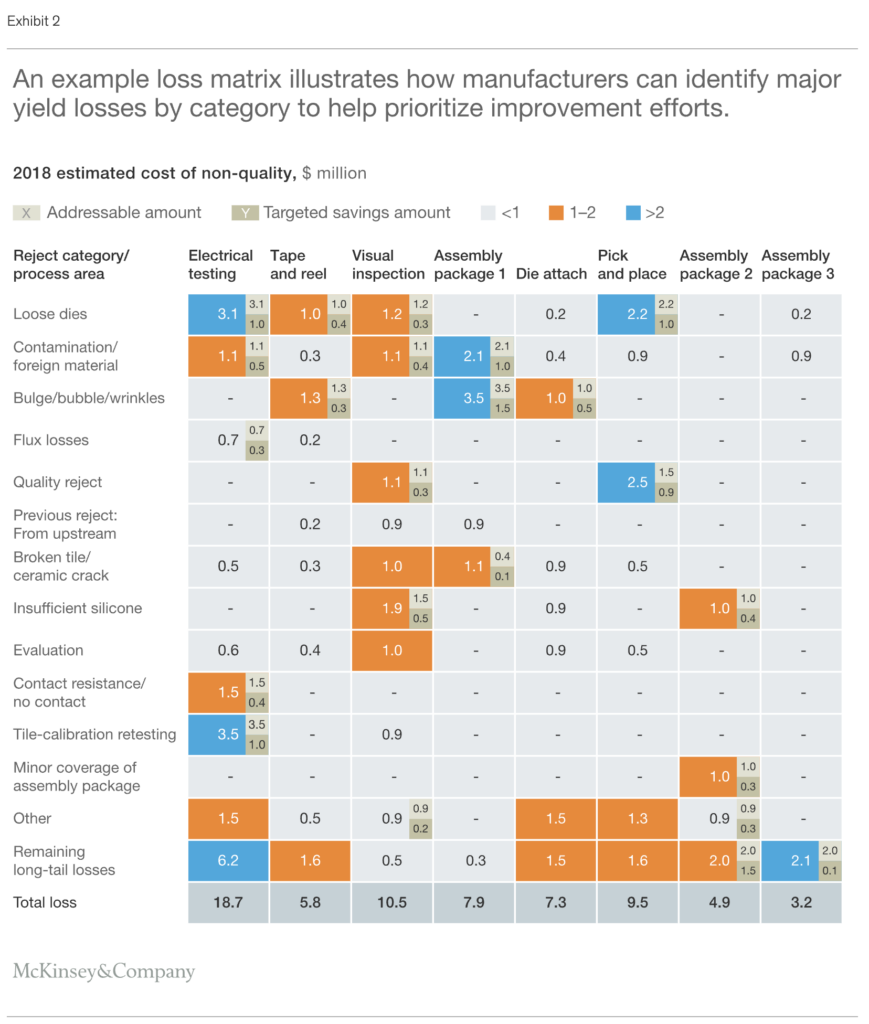
Manufacturing risk grows with product complexity. A defect that escapes development or production can propagate through the supply chain before eventually impacting customers.
The resulting costs can include yield loss, product recalls, qualification delays, warranty expenses, and damage to customer relationships.
Semiconductor data provides visibility into process variation, design weaknesses, reliability concerns, and performance anomalies long before they become customer-facing problems.
Characterization, validation, and production test data help organizations identify risks early and take corrective action. In many cases, the cost of generating additional data is significantly lower than the cost of managing a major manufacturing escape.
Data Enables Quality And Future Planning
Semiconductor data supports both immediate product quality and long-term technology planning. While simulations remain an important development tool, real silicon data is required to validate design assumptions, manufacturing capabilities, reliability targets, and packaging solutions.
| Strategic Objective | Contribution Of Semiconductor Data |
|---|---|
| Product Quality | Identifies defects, variation, and reliability risks |
| Escape Prevention | Detects issues before customer deployment |
| Yield Improvement | Accelerates learning and process optimization |
| Product Development | Validates architectural and design decisions |
| Technology Roadmaps | Supports future node and packaging transitions |
| Capacity Planning | Improves manufacturing investment decisions |
As the industry develops technologies beyond 2nm and expands the use of heterogeneous integration, the importance of silicon data will continue to grow. Future roadmaps are built not only on simulations but also on lessons learned from measured silicon results.
Data As A Competitive Advantage
Historically, semiconductor data was viewed as an output of development and manufacturing activities.
Today, it is becoming a competitive differentiator. Companies that can efficiently collect, correlate, and analyze data across the semiconductor lifecycle gain deeper visibility into product behavior, manufacturing performance, and customer requirements.
This visibility enables faster yield ramps, improved quality, reduced operational risk, and more informed investment decisions. As semiconductor complexity continues to increase, data is no longer simply supporting manufacturing.
It is becoming a strategic asset that helps determine which companies can execute more efficiently, innovate more effectively, and maintain long-term competitive advantage.