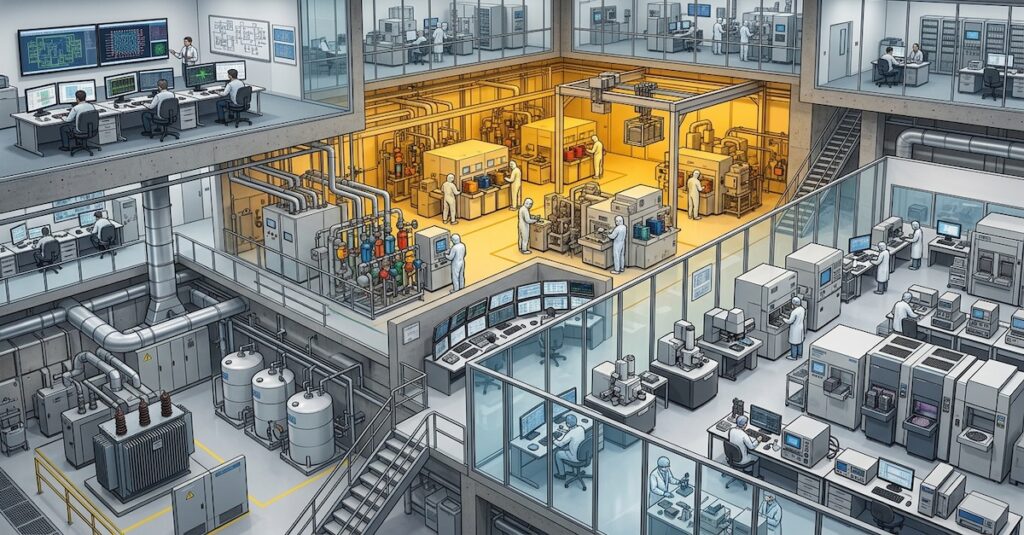
Image Generated Using Nano Banana
From Equipment Cost To Ecosystem Cost
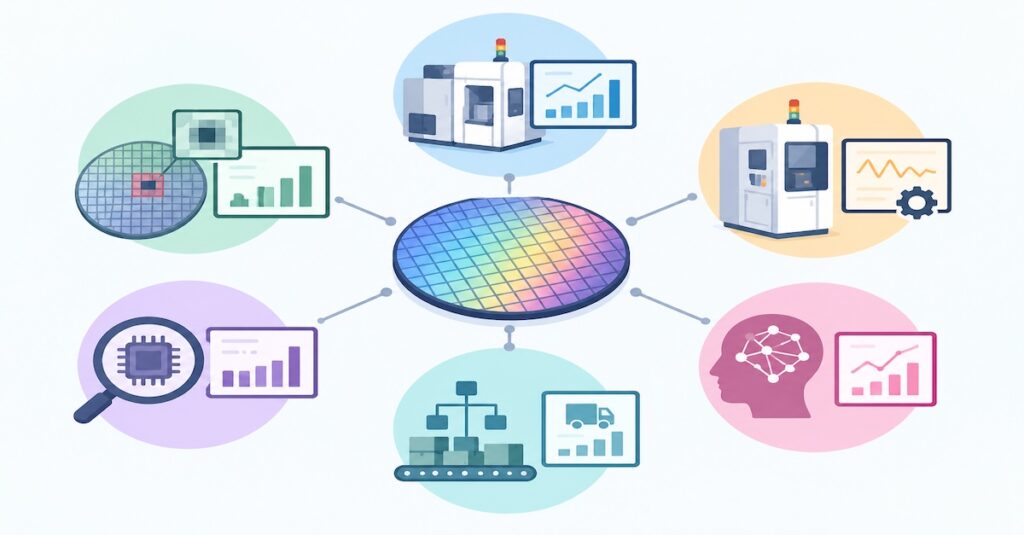
In earlier generations of semiconductor manufacturing, Total Cost of Ownership (TCO) was often evaluated primarily at the level of individual equipment or tools. Decisions were largely centered on capital expenditure, maintenance contracts, and operational overhead such as utilities and consumables.
While these factors remain important, modern semiconductor systems operate within a far more interconnected ecosystem.
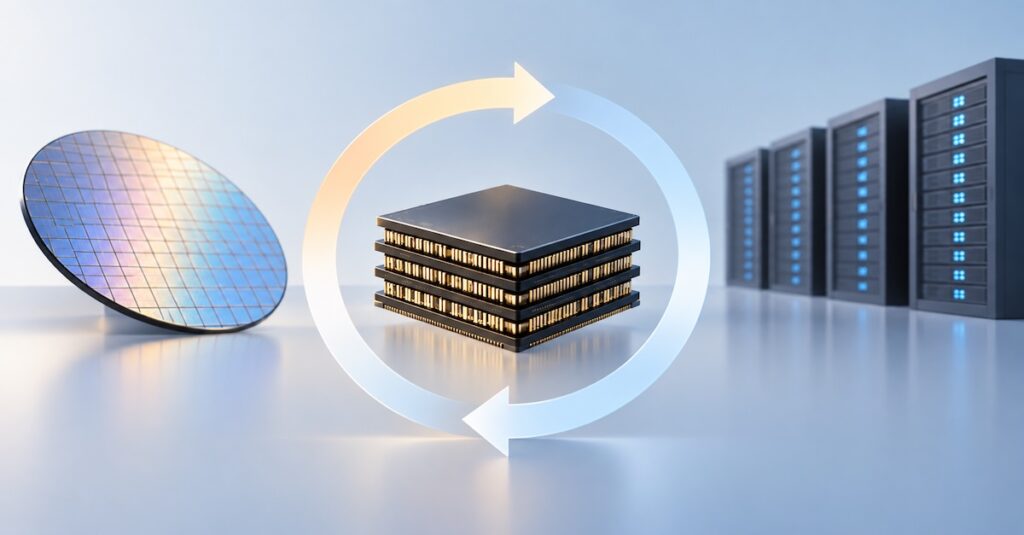
Today’s products frequently combine advanced nodes, heterogeneous integration, chiplets, complex firmware stacks, and system-level validation environments. As a result, the economic impact of a decision rarely remains confined to the original component or tool.
A choice that appears cost-effective in isolation may introduce integration complexity, workflow disruptions, or validation challenges elsewhere in the development pipeline.
In this environment, TCO must be evaluated not only at the equipment level but across the broader ecosystem of design, manufacturing, packaging, and system deployment.
New Factors Shaping Semiconductor TCO
Several emerging factors are reshaping how semiconductor organizations must evaluate long-term cost. Integration complexity has become a major consideration as modern chips combine numerous IP blocks, process technologies, and packaging methods that must function reliably together.
Product lifecycle scalability also plays a critical role, since solutions that perform adequately during prototyping may struggle when production volumes increase. Reliability and quality risk are equally significant, particularly for applications such as automotive electronics, AI infrastructure, and networking systems, where failures carry substantial financial and reputational consequences.
| Factor | Key Features Across Design and Manufacturing | TCO Impact |
|---|---|---|
| Integration Complexity | Integration of multiple IP blocks, heterogeneous chiplets, advanced packaging, cross-domain design verification and manufacturing compatibility | Increased debug cycles, longer design validation, higher integration cost across design and production stages |
| Product Lifecycle Scalability | Design methodologies that support high-volume manufacturing, scalable test strategies, automation readiness in production lines | Operational inefficiencies if early design decisions do not scale efficiently in manufacturing |
| Reliability And Quality Risk | Design robustness, reliability verification, manufacturing process stability, stress screening during test | Higher cost of quality, potential field failures, warranty and recall exposure |
| Engineering Productivity | EDA tool efficiency, simulation turnaround time, silicon debug workflows, manufacturing data analysis capability | Longer development cycles and increased engineering effort |
| Supply Chain Resilience | IP vendor stability, equipment vendor support, material availability, multi-source manufacturing capability | Production disruptions, design delays, and long-term operational risk |
Engineering productivity is another often-overlooked component of cost, tools and workflows that reduce debugging time and streamline integration can significantly influence overall project economics.
Additionally, supply chain resilience has become a growing concern as global semiconductor manufacturing depends on a network of foundries, equipment vendors, and materials suppliers. Together, these factors expand TCO beyond simple financial accounting to include operational and strategic considerations.
Expanding The TCO Framework
To address the increasing complexity of semiconductor development and manufacturing, companies are expanding their Total Cost of Ownership frameworks. These now include multiple dimensions of cost and risk. Traditional models primarily focused on capital investment and operating expenses. Today, organizations must also consider engineering effort, product quality, and long-term scalability when evaluating technology decisions.
Manufacturing teams may initially find equipment with a lower upfront purchase price attractive. However, hidden operational factors can significantly influence lifetime economics. Lower throughput, higher maintenance frequency, or limited automation integration can introduce inefficiencies that raise operational cost as production volumes increase.
Similar challenges appear in semiconductor design environments. An EDA tool or IP block may look economical based on licensing fees. However, hidden costs arise if simulation performance is slow, documentation is limited, or integration support is weak. These issues can extend verification cycles, increase debugging effort, and delay tape-out schedules.
Product-level considerations also influence TCO. Design decisions that slightly reduce initial development cost may add complexity later. This can appear in testing, packaging, or reliability validation. In advanced nodes, issues discovered late in the lifecycle can lead to expensive silicon respins or extended qualification cycles.
By examining financial, operational, engineering, and product-level impacts together, semiconductor organizations get a clearer view of how technology decisions affect program success. An expanded framework helps teams spot hidden costs earlier. It also supports more informed investment choices across design and manufacturing operations.
Integrating TCO Thinking Across The Organization
An effective Total Cost of Ownership (TCO) evaluation cannot be limited to finance or procurement teams alone. In modern semiconductor organizations, TCO must become a shared discipline across engineering, manufacturing, procurement, and business leadership. Decisions made in one area often influence development timelines, manufacturing efficiency, and long-term operational stability.
Engineering teams are essential, weighing long-term factors such as integration complexity, verification effort, maintainability, and scalability when choosing tools or design frameworks. Procurement teams must consider more than initial price and assess vendor dependability, lifecycle support, and ecosystem fit.
Operations teams contribute by tracking equipment availability, throughput patterns, and maintenance demands to clarify how infrastructure decisions shape production outcomes. These observations reveal previously unseen operational costs not captured during purchase decisions.
Business leadership must synthesize these viewpoints into long-term planning models that look beyond short-term savings. When engineering, operations, procurement, and business strategy unite around TCO principles, organizations can make investment choices that drive operational effectiveness and sustained competitiveness.