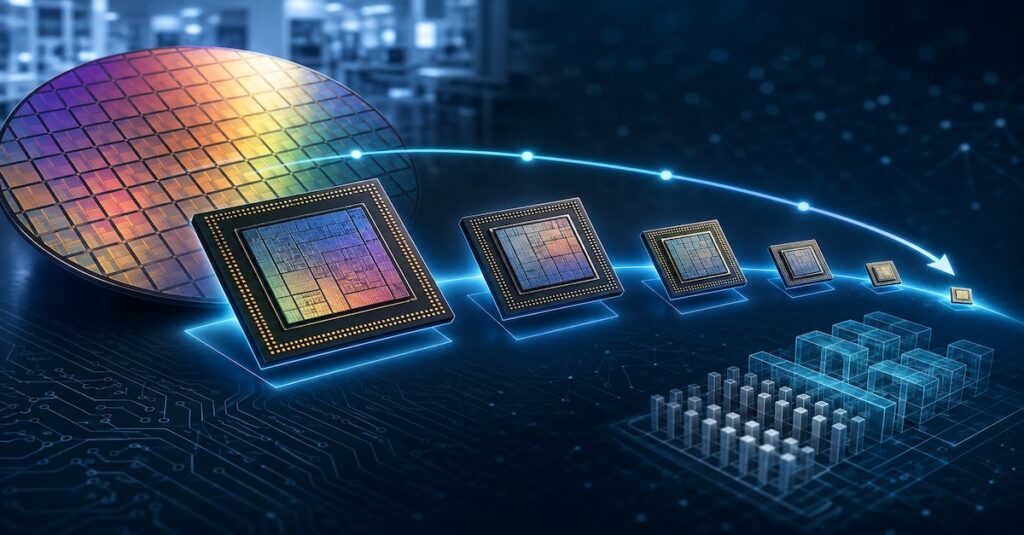
Image Generated Using Nano Banana
Fragmented Data To Integrated Manufacturing Intelligence
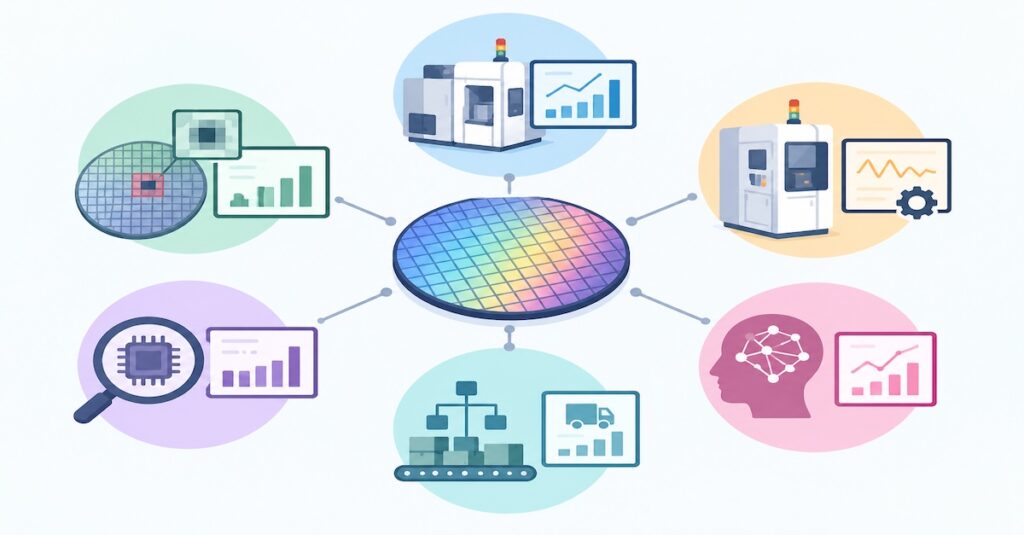
Semiconductor manufacturing has always been data-intensive, but historically this data has been fragmented across multiple systems, including equipment logs, yield databases, test data, MES, and enterprise systems. These systems evolved independently and were optimized for specific functions rather than unified decision-making.
At the core of the factory, Manufacturing Execution Systems (MES) track and control production in real time, serving as the bridge between planning systems and physical operations. These platforms monitor workflows, enforce process routes, and maintain traceability across wafers and lots.
However, MES alone does not solve the broader challenge. Semiconductor manufacturing needs integration across design data, process data, equipment signals, and test outcomes. Modern fabs now generate vast, varied datasets that must be connected, contextualized, and analyzed in real time.
This has led to data platforms. These architectures unify data across the semiconductor production lifecycle. They move beyond data collection to data orchestration. This shift enables manufacturing to advance from reactive to predictive and adaptive operations.
Digital Thread And Lifecycle Connectivity
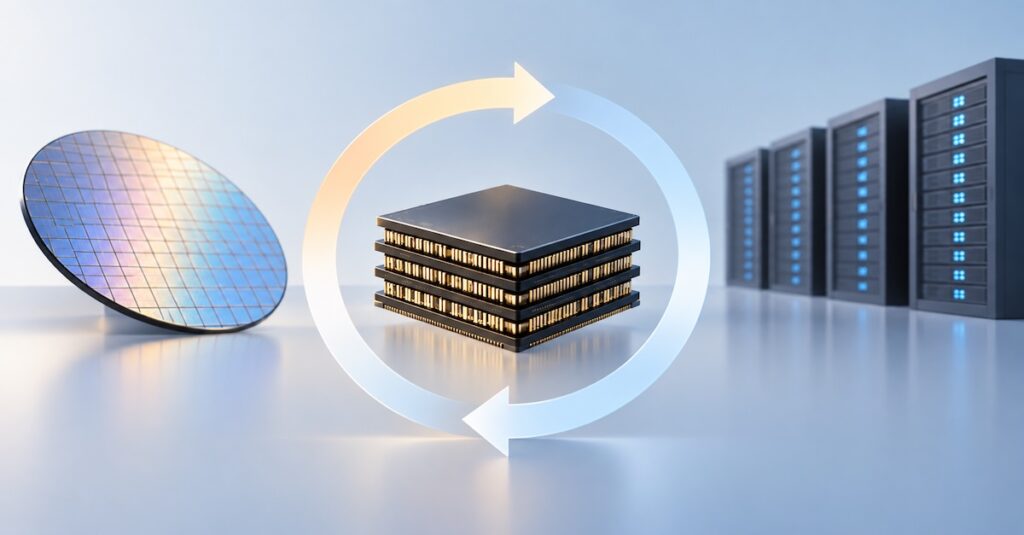
A defining concept behind modern semiconductor data platforms is the digital thread. This represents a continuous flow of data connecting design, manufacturing, test, and field operations.
In semiconductor manufacturing, this connectivity is critical because design decisions influence manufacturability and yield, process variations impact final performance, test data reveals latent defects and reliability risks, and field data feeds back into future design iterations.
Traditional flows treat these stages as loosely connected. Data platforms enable closed-loop learning systems where insights from one stage inform decisions in another.
| Dimension | Traditional Environment | Data Platform Driven Environment |
|---|---|---|
| Data Architecture | Isolated systems with limited integration | Unified data fabric across lifecycle |
| Data Flow | Batch oriented and delayed | Real time and streaming enabled |
| Data Context | Function specific and localized | Cross domain and contextualized |
| Decision Making | Reactive and experience driven | Predictive and data driven |
| Yield Learning | Slow feedback loops | Accelerated closed loop learning |
| Test Role | End of line validation | Continuous observability layer |
| Scalability | Limited to individual fabs or lines | Scales across global manufacturing networks |
| Analytics | Siloed tools and offline analysis | Integrated AI and advanced analytics pipelines |
| System Integration | Manual and fragmented | Automated and API driven |
| Competitive Advantage | Process and equipment capability | Data infrastructure and intelligence |
Technically, this requires integration across multiple layers, including MES and shop floor systems, equipment communication frameworks such as SECS and GEM, yield management and defect analytics platforms, and design environments.
Modern architectures increasingly serve as a data fabric, connecting these layers into a unified environment. This removes silos and enables cross-domain analytics that were previously difficult to achieve.
Data Platforms As The Foundation
The next evolution of semiconductor manufacturing is being driven by digital twins, which are virtual representations of manufacturing processes, equipment, and entire fabs. These capabilities depend fundamentally on integrated data platforms.
Digital twins enable real-time monitoring of process behavior, predictive maintenance, anomaly detection, scenario simulation for yield and throughput optimization, and faster new product introduction cycles.
They operate by continuously ingesting data from sensors, equipment, and manufacturing systems, creating a live feedback loop between physical and digital environments.
Industry solutions are emerging that treat data platforms as the backbone of these capabilities. AI-driven platforms combine high-speed data access, feature extraction, and visualization to accelerate analytics and application development.
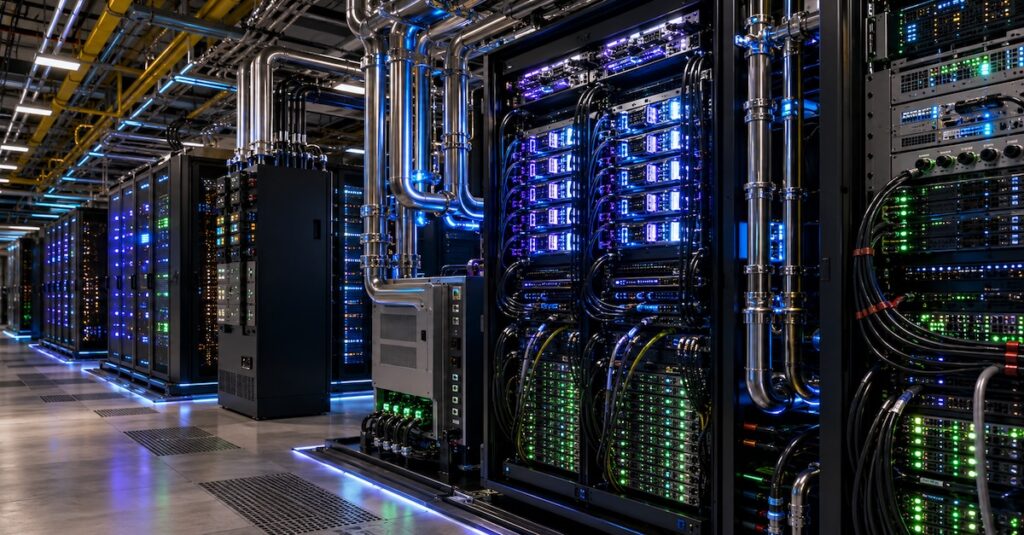
Importantly, digital twins are not standalone tools. They require unified data ingestion pipelines, scalable storage and compute infrastructure, real-time analytics engines, and standardized data models across systems.
Without a robust data platform, digital twins remain isolated simulations. With it, they become operational systems that actively drive manufacturing decisions.
Strategic Layer In Semiconductor Manufacturing
The emergence of data platforms marks a structural shift in semiconductor manufacturing from process-centric execution to data-centric orchestration. Modern fabs are no longer defined only by equipment capability or process technology. They are increasingly defined by their ability to integrate data across the ecosystem, generate actionable insights in real time, enable cross-functional collaboration, and scale analytics across global manufacturing networks.
Data platforms unify traditionally separate domains such as PLM, ERP, MES, yield systems, and design environments into a cohesive architecture. This convergence enables faster decision-making, improved yield learning cycles, and more resilient supply chains.
At a strategic level, this transformation has three major implications.
First, data becomes a manufacturing asset. It is no longer just a byproduct but a core driver of yield, cost, and performance optimization.
Second, test and manufacturing evolve into observability layers that provide continuous feedback across the lifecycle rather than acting as isolated validation checkpoints.
Third, competitive advantage shifts to data infrastructure. Companies that can build and operate scalable, intelligent data platforms will outperform those that rely on fragmented systems.